
I’ve been installing and repairing HVAC Los Angeles ca systems across Los Angeles for a little over ten years. I hold a California C-20 license, and most of my weeks are spent bouncing between beachside bungalows, mid-century Valley homes, and newer condos squeezed into tight lots. The work has taught me that HVAC here isn’t just about equipment—it’s about understanding how Angelenos actually live, how buildings were thrown up in different eras, and how our climate quietly punishes shortcuts.
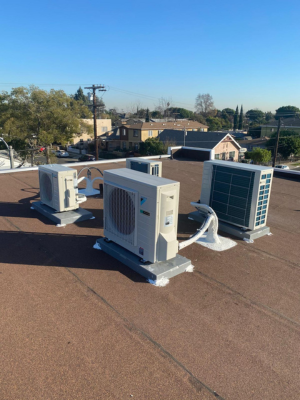
One of my earliest jobs still sticks with me. It was a small house near the coast with a brand-new system installed by another company. On paper, everything looked fine. In practice, the home never cooled evenly. The living room was clammy while the back bedrooms felt like a refrigerator. When I crawled into the attic, I found flex ducts crushed under storage boxes and runs that were far longer than they should’ve been. That job taught me something I still repeat to homeowners: in Los Angeles, ductwork matters as much as the unit itself, maybe more. You can buy the best equipment on the market and still be miserable if the air can’t get where it needs to go.
Los Angeles has a reputation for “perfect weather,” which leads a lot of people to underestimate HVAC. I see this most often during remodels. A homeowner will redo a kitchen or add a room and assume the existing system can handle it. Last spring, I worked on a house in the Valley where a garage conversion added several hundred square feet. The old system had been limping along for years, and the new space pushed it over the edge. The homeowner was frustrated because the AC technically still ran—but it ran nonstop and never quite caught up. The fix wasn’t just upsizing the unit; it meant rethinking airflow, sealing leaks, and adding returns where none existed before.
One mistake I run into constantly is oversizing. There’s a belief that bigger equals better, especially during heat waves. In reality, oversized systems short-cycle. They blast cold air, shut off too quickly, and never remove enough humidity. In a place like Los Angeles, where humidity isn’t constant but spikes during certain conditions, that leads to rooms that feel sticky despite the temperature reading. I’ve replaced several systems that were only a few years old because the homeowner couldn’t stand how uncomfortable the house felt. In almost every case, the replacement was smaller and properly balanced—and the comfort difference was immediate.
Another common issue is ignoring zoning and layout. Many LA homes were built without central air in mind. Retrofitting them requires compromises. I remember a Spanish-style home where the owner insisted on keeping original plaster ceilings untouched. We had to get creative, running low-profile ducts and carefully placing vents to avoid dead spots. It took more planning and some back-and-forth, but the result worked without turning the house into a patchwork of soffits. That kind of job doesn’t come from rushing or quoting blind over the phone. It comes from walking the space and understanding how air wants to move through it.
Maintenance is another area where Los Angeles homeowners get tripped up. Because systems don’t always run hard year-round, people forget about them until a heat wave hits. I get emergency calls every summer from units that simply need basic service—dirty coils, clogged drains, filters that haven’t been changed in years. One customer last summer was convinced their compressor had failed. It turned out the outdoor unit was choked with debris and dog hair, something that had built up slowly over time. A proper cleaning brought it back to life.
Energy efficiency comes up a lot in conversations, especially with rising electricity costs. High-efficiency equipment can make sense here, but only if the rest of the system supports it. I’ve advised against expensive upgrades when the real problem was leaky ducts or poor insulation. Spending several thousand dollars on a premium unit doesn’t pay off if half the conditioned air disappears into an attic. Fixing the basics first usually delivers better comfort and lower bills.
I’m also candid with clients about what’s overkill. Variable-speed systems are fantastic in the right house, but they’re not magic. In a small condo with limited duct access, the benefits can be marginal compared to the cost. I’d rather explain that upfront than sell something flashy that won’t deliver noticeable value.
If there’s one piece of advice I’d give anyone dealing with HVAC in Los Angeles, it’s this: treat it as a system, not a box in the yard. Climate, building age, layout, and how you actually use your home all matter. I’ve seen modest systems perform beautifully because they were designed thoughtfully, and I’ve seen expensive installs fail because someone cut corners.
After ten years in attics and crawlspaces, I still enjoy the moment when a homeowner feels the difference right away—the even temperatures, the quieter operation, the sense that the house finally works with offering relief rather than fighting it. That’s the part of HVAC in Los Angeles that never gets old.